Portfolio Magic

CREATED BY
March 24, 2025
MICHAŁ ZAREMBA
Why is a portfolio crucial? Or 2+2+2=10
The goal of creating a good portfolio (which should be enough for starters) is to select a group of effective strategies in such a way that their profits add up, and drawdowns - periods of losses - do not overlap too much. This means that the strategies should support each other during challenging periods that each of them will sooner or later encounter. This can result in smoothing out the capital curve and optimal resource utilization.
Example of a portfolio
Here is an example of a portfolio consisting of four average strategies:


In the example above, it can be seen that in the portfolio, profits from individual strategies were summed up, while the maximum drawdown increased only by 1/4 compared to the strategy with the largest drawdown. This shows how a portfolio can reduce risk while increasing potential profits.
Of course, a real portfolio aims to achieve much more efficient growth curve alignment than in the above case. Here is an example of the Equity Chart of a real SAP L Portfolio:

Is creating a portfolio complicated?
Creating a portfolio is technically simple if you use tools like Strategy Quant. However, in practice, creating the perfect portfolio can be a complex process due to the number of options and the need to balance different factors.

Key questions when creating a portfolio
Which strategies to choose? They should be effective and at the same time have low correlation to minimize risk.
How many strategies should be in the group? An optimal portfolio should provide diversification and proper capital utilization while avoiding constraints such as those resulting from the Pattern Day Trader rule.
How to allocate capital to individual strategies? It is important that the investment return is acceptable in relation to the risk and that the exposure is at the appropriate level.
At Algohubb, we strive to make this task easier for you by providing:
Ready-to-use portfolios that you can use as a template or inspiration to create your own.
A proven portfolio creation process that we ourselves use and will share with you in our materials.
Tools such as Exposure Master or PDT Finder, which will help you answer key questions when creating a portfolio.
Portfolio creation process
We will soon publish a more detailed article on the portfolio creation process. Sign up for our newsletter to stay up to date.
Periodic portfolio review
Another important aspect of portfolio management is its periodic review and strategy management, such as adding or removing strategies from the portfolio and making any changes to capital allocation. Personally, I conduct a quarterly review of strategies, analyzing their effectiveness over a 3-month and 12-month horizon. Based on the criteria for selecting strategies in my workflow, I decide on any portfolio modifications.
To start, it is important to focus on having a wide range of strategies with positive effectiveness and understanding how they work and how to safely use them.
Summary
A portfolio of strategies is a combination of different investment methods aimed at increasing profits while limiting risk. Creating a portfolio may be technically simple, but it requires balancing many factors, such as selecting low-correlated strategies and proper capital allocation to maximize returns while reducing risk. Algohubb offers tools and ready-made portfolios to assist in this process, and recommends regular portfolio review and updates.
BEST STRATEGIES


Week Explorer Strategy
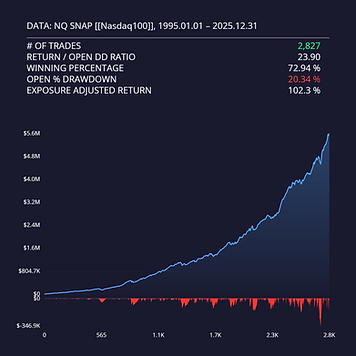
For last 40 years, the best day of the week on the US stock market has been Tuesday. The next day with the highest return is Wednesday. We present a strategy that skillfully exploits this market behavior by opening positions only on Mondays and cashing in profits in almost 70% of cases over the following days.


●
KO Christmas Rally Strategy
The seasonal holiday pattern on Coca-Cola is one fantastic example of how seasons affect stocks. The pattern has a logical justification, which is the association of the brand with holidays built over decades. This consequently influenced consumer and investor behavior before this period.

